Introduction
The summary of product characteristics is the primary source for determining the specific conditions of use of a medicinal product. Therapeutic innovation is progressing at a pace that far exceeds the updating of marketing authorizations. Off-label medicinal products are also referred to as authorised medicinal products used under conditions other than those approved or outside their authorized indication. Despite being a widely established practice, its exact magnitude remains unknown, owing to the absence of registries and the limited number of publications.1 Gazarian et al.2 reported an off-label prescribing rate ranging from 7.5% to 40% in adults, which may reach 90% in some pediatric hospital subspecialties.
The off-label treatments most frequently requested are antineoplastic and immunomodulating agents, followed by anti-infectives and drugs acting on the nervous system.3 Nevertheless, this practice, although widely extended in medicine worldwide, continues to be regarded as exceptional within the regulatory framework. Despite its high prevalence, the persistent terminological confusion observed in clinical practice is of particular concern. Different concepts referring to non-equivalent realities are often used interchangeably or remain poorly understood by healthcare professionals in routine care.
HIV infection remains a major global health challenge, despite the extraordinary advances achieved with antiretroviral therapy (ART). In 2024, an estimated 40.8 million people were living with HIV worldwide, and 31.6 million were receiving antiretroviral treatment.4 The chronic nature of HIV infection has increased the therapeutic complexity of its management, making it an appropriate setting in which to reflect on access to medicinal products in three special situations, which arise frequently in clinical practice: investigational medicinal products, foreign medicinal products, and medicinal products used off-label.5,6
Although the use of medicinal products outside their authorized conditions may offer advantages in specific clinical scenarios, it also entails clinical, ethical, and economic challenges, as well as significant risks. At a minimum, this practice requires supporting scientific evidence; however, it has been estimated that only approximately 30% of unauthorized prescriptions are supported by adequate scientific evidence.7 It is therefore necessary to consider whether the selection of a medicinal product outside the conditions specified in the summary of product characteristics is always justified, legally compliant, or can be regarded as a valid option in clinical practice.
Another relevant aspect to consider is the lack of harmonization between the indications approved by different regulatory agencies and the recommendations issued in clinical practice guidelines promoted by scientific societies, which introduces further variability into decision-making.3
Therefore, a thorough bioethical analysis is needed to shed light on a reality that is increasingly present in healthcare practice, where professionals must make complex decisions involving not only clinical criteria but also moral and legal responsibilities.
Medicines under special situations
Compassionate use of investigational medicines
It refers to the administration of active substances that have not yet been authorized for marketing, either because they are being evaluated in clinical trials assessing their safety and efficacy, because they are undergoing the process of obtaining their first marketing authorization in the country, or, once already marketed, they are being investigated for indications other than those previously approved.8
Compassionate use is regulated as a special modality of medicine use. In Spain, the authorization ultimately falls under the responsibility of the Spanish Agency of Medicines and Medical Devices (AEMPS). Access is reserved for specific patients who lack an effective and safe therapeutic alternative, do not meet the inclusion criteria for clinical trials, and are in a clinical situation that does not allow them to wait until the completion of the research process and the authorization of new treatments. It should be conceived as a last-resort measure rather than as a first-line therapeutic option.9 Access may be granted on an individual basis for a specific patient or through a temporary use authorization issued by the AEMPS for a group of patients.10
Foreign medicines
They are considered to be those medicinal products that, although authorized and marketed in other countries, lack national authorization. Access to such medicines is contemplated when no medicinal product with the same composition exists, when the available pharmaceutical form does not allow treatment of the patient, and/or when no authorized therapeutic alternative is available. The need for importation may arise from the absence of suitable alternatives to address specific clinical needs, from supply shortages that compromise continuity of care, and, increasingly, from the withdrawal from the market of certain medicines because they are no longer of interest to the marketing authorization holders.11
Similar to compassionate use, access to foreign medicines may be channeled through two routes: individual applications submitted to the AEMPS, or collective access for patient subpopulations. In the latter case, the AEMPS may establish a use protocol at the request of the health departments of the distinct Spanish autonomous communities.10
The importation of foreign medicines is a useful measure to mitigate increasingly frequent supply problems. Although it does not address the structural causes of shortages, it may provide a temporary solution in critical situations, provided that rigorous quality control and regulatory requirements are ensured to preserve patient safety.12
Since 2008, the AEMPS has published information on supply problems affecting medicinal products for human use on its website, keeping this information permanently updated. At the end of March 2026, the AEMPS recorded 836 therapeutic presentations with availability difficulties, including five antiretrovirals indicated for HIV: lamivudine, atazanavir, emtricitabine/tenofovir disoproxil, zidovudine, and tenofovir disoproxil.13
Off-label use of medicines
Authorized use refers to the use of a medicine in accordance with the characteristics for which it was evaluated and approved. In the United States, the Food and Drug Administration (FDA) considers a medicine or treatment to be “approved” when its use is consistent with the content of the authorized product information.14 In the Anglo-Saxon context, the summary of product characteristics is commonly referred to as the label, which is used in accordance with the authorization, known as on-label use, whereas use outside this official information is referred to as off-label use. Therefore, medicines used under conditions other than those authorized are those administered in circumstances that differ from those described in their summary of product characteristics. These are already marketed medicines, but used in a way that does not correspond to the use described in the marketing authorization issued by the competent regulatory authority in each country.
The summary of product characteristics is the official document that establishes the essential information on the medicine: therapeutic indications, dosage regimens, target population, and route of administration. In clinical practice, any of these conditions may deviate from what has been approved, giving rise to what is known as use outside the authorized indication or off-label use.
Regarding the characteristics whose modification constitutes off-label use, the FDA15 states that this may include use of the medicine for a disease or condition different from that approved, administration by a route other than the authorized route, or the use of a dose that does not correspond to the approved dose.
To all these situations, Conroy et al.16 add use in different age groups, such as the pediatric population. Off-label use in pediatrics is frequent in anti-infective treatments (21.8%). This is due to the lack of specific authorization in this population, caused by physiological pharmacokinetic/pharmacodynamic differences between children and adults, which make it difficult to extrapolate authorized doses, as well as by ethical, logistical, and economic barriers to conducting clinical trials.3,17
In light of these considerations, the definition of “off-label use” proposed by López et al.18 may be adopted as the most appropriate formulation, as it incorporates the nuances outlined above: it refers to the use of medicines under conditions other than those included in the summary of product characteristics, whether in terms of dose or frequency of administration, age range, route of administration, or indication in the reference population group.7,18
In the HIV field, some off-label uses illustrate how clinical practice may precede regulatory authorization. One example is the use of bictegravir/emtricitabine/tenofovir alafenamide as non-occupational post-exposure prophylaxis, or in intermittent “five days on, two days off” regimens, as opposed to the approved once-daily dosage.19 Although some observational studies and pilot trials have explored intermittent regimens with favorable results in previously suppressed individuals, their use is not part of the standard of care.20
Another example is the use of long-acting injectable cabotegravir/rilpivirine in patients with initial viremia, defined as a viral load ≥ 50 copies/mL, due to difficulties adhering to conventional oral therapy.21
Current Spanish legislation on the off-label use of medicines
The inaccuracies of the law, largely resulting from slow legislative evolution, appear to be explained by the fact that, for many years, the true meaning of compassionate use was not fully delimited and, in practice, overlapped with the other two special uses of medicines.
In Spain, the publication of Royal Decree 1015/20096 is currently configured as the specific regulation in force in this area. It establishes that the use of medicines under conditions other than those authorized must be exceptional and limited to situations in which no authorized therapeutic alternatives are available for a specific patient. In such cases, the physician responsible must justify the need for treatment in the clinical record, inform the patient of the potential benefits and risks of the treatment, and obtain their informed consent (IC).
The AEMPS shall be responsible for:
- − Preparing recommendations for use when there are foreseeable risks, special prescribing restrictions, or a relevant healthcare impact, which must be taken into account in the therapeutic protocols of healthcare centers. These recommendations shall be based on the available efficacy and safety data, also reviewing the results of any clinical trials of which it is aware and the medicine’s risk management plan. In preparing them, the AEMPS may rely on its network of experts and request information from the marketing authorization holder
- − Establishing a system for exchanging information with the competent authorities of each Spanish region
- − Reviewing the recommendations when new data becomes available
- − Informing the marketing authorization holder of the recommendations for use
- − Notifying suspected adverse reactions to the marketing authorization holder, in accordance with the provisions of Royal Decree 1344/2007,22 of October 11th, regulating the pharmacovigilance of medicinal products for human use.
- The physician responsible for the treatment shall be required to:
- − Inform the patient, in understandable terms, of the nature of the treatment, its importance, implications, and risks, and obtain their consent in accordance with Law 41/2002,23 of November 14th
- − Notify suspected adverse reactions in accordance with the provisions of Royal Decree 1344/2007,22 of October 11th
- − Respect any restrictions established in relation to prescribing and/or dispensing, as well as the therapeutic care protocol of the healthcare center.
- The marketing authorization holder of the medicine shall be required to:
- − Notify any suspected adverse reactions of which it becomes aware, in accordance with Royal Decree 1344/2007,22 of October 11th
- − Refrain from promoting the use of the medicine under conditions other than those authorized, or from distributing any material that could indirectly encourage such use
- − Provide the AEMPS with any information relating to the medicine that could have an impact on the recommendations for use.
- Law 41/2002 predates Royal Decree 1015/2009, which may explain why Medicines under Special Situations are not explicitly included among the circumstances requiring a written IC.
Clinical foundations of the off-label use of medicines
Quality and certainty of the scientific evidence
The use of medicines outside their authorized indication requires, at a minimum, some scientific evidence to support their use. However, it has been estimated that only approximately 30% of unauthorized prescriptions are supported by adequate scientific evidence.7 In addition, the patient groups in which off-label use is applied are usually substantially smaller than those included in the authorization, which limits accumulated clinical experience and increases potential risks, placing the patient in a position of particular vulnerability. Although any clinical decision requires consideration of the likelihood of treatment efficacy, this reflection becomes especially important in off-label use supported by limited evidence, making a cautious assessment of the benefit-risk balance essential.
Moreover, the strongest evidence justifying a treatment is often not included in the summary of product characteristics, but rather derives from representative post-authorization studies. Morales and Guthrie24 argue that the quality of the evidence supporting the prescription is more important than the mere presence or absence of authorization in the summary of product characteristics.
The responsibility and critical clinical judgment of the prescriber are therefore decisive, often supported by the Pharmacy and Therapeutics Committee or by a specific clinical committee.
Exceptional nature of use
Although formally considered an exceptional practice, off-label use may be particularly relevant in antiretroviral treatment for HIV infection, owing to the gap between the rapid pace of therapeutic innovation and the updating of authorized conditions of use.25 Its use tends to become normalized when incorporated into clinical guidelines or protocols.
Decision-making algorithm: rationale and justification
Off-label use should be rigorously assessed after considering authorized alternatives and should be supported by decision-making algorithms that allow the evaluation of scientific evidence, clinical need, and safety before treatment initiation.
The following decision-making algorithm is based on the initial proposal by Gazarian et al.2 and was subsequently developed by the Council of Australian Therapeutic Advisory Groups26 (Fig. 1). The central premise of the algorithm is that the acceptability of off-label use depends, first and foremost, on the robustness of the scientific evidence. The algorithm establishes that, when the level and quality of the scientific evidence are high, off-label use may be considered appropriate. However, when there is no high-quality evidence to support its use, it is not recommended.
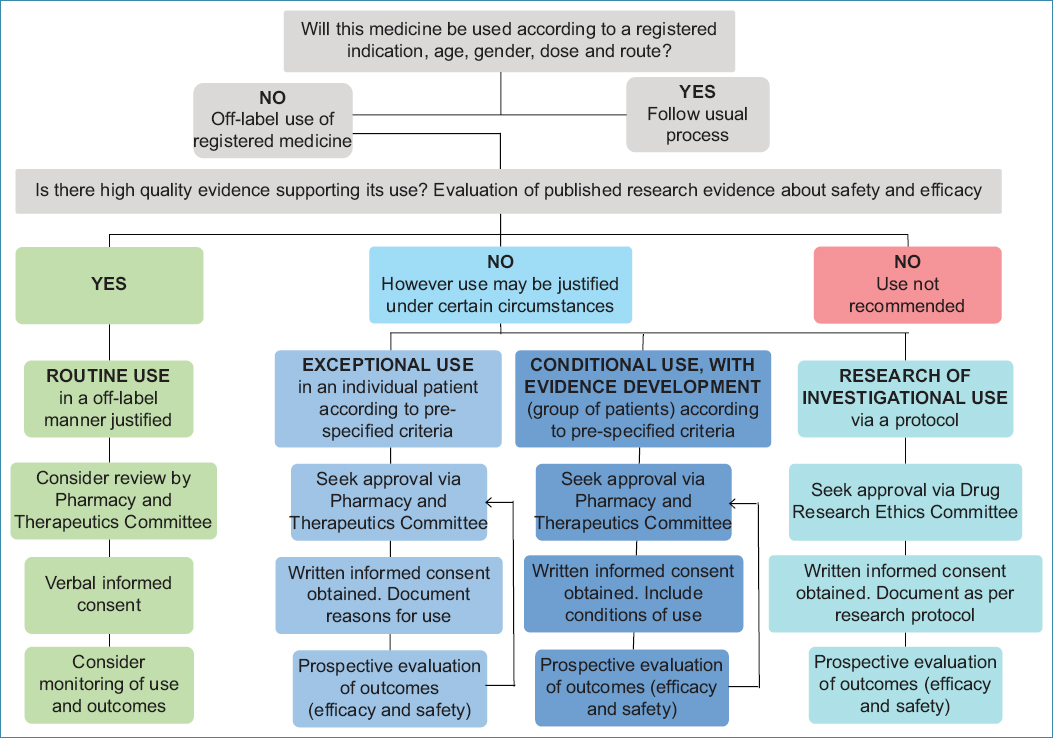
Figure 1. Decision-making algorithm for the off-label use of medicines (adapted from: Council of Australian therapeutic advisory groups. Rethinking medicines in Australian Hospitals; Guiding Principles for the quality use of off-label medicines. Darlinghurst, 201326).
In the intermediate situation, when the proposed off-label treatment lacks robust scientific evidence, however, its use may nevertheless be justified. Three scenarios are distinguished: exceptional use in individual patients according to predefined criteria, conditional use in groups of patients according to predefined criteria, and compassionate use of investigational medicines through a protocol.
In the cases of individual patients or groups of patients, the recommended approach is similar. For the off-label indication to be appropriate, the patient must meet the criteria described in the literature, namely the inclusion criteria, and the Pharmacy and Therapeutics Committee must authorize its use. The algorithm emphasizes two cross-cutting obligations: ensuring written IC proportionate to the degree of uncertainty of the case, and carrying out a prospective evaluation, thereby strengthening treatment pharmacovigilance. In the third scenario, concerning investigational medicines, it is also recommended to request approval for use from the Research Ethics Committee for Medicines.
The benefit-risk balance
Previous therapeutic failure may induce optimism bias, leading to an overestimation of the potential benefit of off-label use and an underestimation of its risks. No medicine is free from adverse effects, and off-label use is no exception. Moreover, use outside the authorized conditions may alter the expected safety and efficacy profile.2
The assessment of the benefit-risk balance comprises two phases and must be individualized. First, a technical evaluation of the available evidence on efficacy and safety should be conducted, assessing its applicability to the specific patient. Second, a value judgment must be made to determine whether this relationship is favorable, in accordance with the minimum threshold established by the health authorities.
The cost-benefit balance
The overall cost of pharmacological treatments is higher for unauthorized indications than for approved indications, and this is one of the main factors associated with increased pharmaceutical expenditure.27 Although price should not be the fundamental factor guiding prescribing, opportunity cost must be taken into account; that is, what is forgone as a consequence of making a given decision.
In Spain, the Royal Decree-Law 9/201128 introduced selective funding criteria based on budgetary impact, incremental clinical benefit, and cost-effectiveness. Avoiding uses without sufficient evidence or where better therapeutic alternatives are available reduces avoidable expenditure. However, a more efficient off-label alternative with comparable efficacy and safety may represent the most rational and sustainable option.
Bioethical analysis of the off-label use of medicines
We can approach the consideration of using medicines outside the label based on at least three different ethics frameworks, namely principlist, virtue, and utilitarian.
Principlist bioethics
Principlism is an ethical framework based on non-absolute principles of obligation. Beauchamp and Childress proposed four principles that are applicable to the off-label use of medicines: autonomy, non-maleficence, beneficence, and justice.29
The principle of autonomy requires that patients participate in decisions concerning their health and receive clear and understandable information about the benefits, risks, and alternatives, enabling them to accept or refuse treatment. In cases of incapacity, this decision falls to their legal representative.29 In off-label use, IC acquires particular relevance owing to the greater uncertainty involved.
However, several studies indicate that patients are not always informed of the unauthorized nature of these treatments, which compromises the validity of their decision.30,31 Despite the ongoing debate as to whether informing patients of the off-label nature of treatment may alarm them or overload clinical practice, the prevailing view is that transparency is essential to protect patient autonomy.32
The principle of non-maleficence “requires that no intentional harm be caused,” whether by action or omission, and has priority status.33 Routine off-label use, particularly when authorized alternatives with a better benefit-risk profile exist or when interests unrelated to the patient’s welfare are involved, may compromise the principle of non-maleficence.
The principle of beneficence requires acting in the patient’s best interests.29 Off-label prescribing may be justified when no suitable authorized alternatives are available. Nevertheless, it requires a rigorous assessment of the benefit-risk balance, prioritizing interventions with the greatest likelihood of improving health and quality of life, and avoiding therapeutic obstinacy based solely on pharmacological innovation.30
Finally, the principle of justice raises the need to reconcile access to treatments with the equitable management of limited healthcare resources.29 In this regard, off-label use may provide therapeutic options for vulnerable populations, such as pediatric patients and pregnant women, or for patients without available alternatives. Nevertheless, this situation generates a conflict between individual beneficence and distributive justice, requiring rational and equitable management of collective resources. Moreover, it may give rise to inequalities and tensions in system sustainability when it entails higher costs or when access depends on the resources of a particular center.34
Virtue bioethics
Pellegrino et al.35 argue that the proper fulfillment of the moral obligations of healthcare professionals is impossible without the habitual practice of medical virtues, and emphasize the need for training in, and acquisition of, personal virtues. Among these virtues, they highlight “self-effacement,” understood as the setting aside of one’s own interests in favor of the patient’s interests. This does not imply the suppression of the physician’s judgment, but rather the conscious exercise of moral prudence and clinical empathy.
A practice incompatible with “self-effacement” would be avoiding the prescription of off-label treatments when they represent the best available therapeutic alternative, due to the bureaucratic difficulties and time required to comply with the justification procedures before regulatory authorities.
Utilitarian bioethics
Utilitarianism holds that what is morally right is that which maximizes the well-being of the greatest number of people.36 Utilitarians distinguish between two levels of moral deliberation: rule utilitarianism, which prioritizes norms aimed at achieving the greatest collective benefit; and act utilitarianism, which assesses the ethics of each act independently. An individual utilitarian decision may have unfavorable consequences at other levels.37
Savulescu et al.38 propose a set of allocation rules for situations in which resources are limited, which may also be applicable to the assessment of off-label treatments. Priority should be given to the intervention that extends the greatest benefit to the largest possible number of people, as well as to the intervention that provides a longer duration of benefit, whether in terms of life-years gained or persistence of the therapeutic effect. Likewise, the decision should not focus exclusively on survival, but also on quality of life and overall well-being. Within this framework, what is morally relevant is the actual outcome of the intervention, regardless of the initial intention or whether the decision formally complies with an institutional protocol. In addition, alongside individual benefit, possible social benefit should be considered, understood as the positive effects that the intervention may generate for third parties, that is, social value or utility.
In clinical practice, off-label use raises the dilemma of whether to prioritize the individual benefit of a potentially more effective alternative or efficiency and equity in the allocation of resources.
Conflicts of interest in the off-label use of medicines
It is important to identify potential conflicts of interest among the different stakeholders involved in off-label use: physicians, patients, healthcare managers, and the pharmaceutical industry. Physicians may invoke their duty of beneficence and the clinical autonomy associated with freedom of prescribing. Patients, in turn, may appeal for access to treatment and to the right to receive the most appropriate therapeutic alternative. Healthcare managers may question the appropriateness of funding non-approved indications of medicines, particularly because of their budgetary impact and the absence of specific authorization. Finally, the pharmaceutical industry may be motivated by market expansion.
It is essential that patients receive complete, truthful, and understandable information when they are prescribed off-label treatment, given the exceptional and, in some cases, experimental nature of such prescribing. This information is indispensable to ensure a free decision and, therefore, to respect patient autonomy. In this way, responsibility for treatment is shared between the healthcare professional and the patient. Nevertheless, some controversy persists regarding the obligation to explicitly communicate the unauthorized nature of an indication, because this may increase bureaucracy, reduce time available for clinical tasks, and potentially undermine the patient’s confidence in the treatment.32
Economic conflicts of interest are frequent; therefore, their explicit disclosure is essential to preserve transparency. Such disclosure enables readers to critically appraise studies and assess possible biases when interpreting the results.39
Among the ethical dilemmas faced by the pharmaceutical industry is the decision of whether to promote modification of the summary of product characteristics, as this procedure involves substantial costs. In addition, regulatory restrictions on the promotion of off-label uses generate tension between the prohibition on advertising such uses and the possible moral obligation to disseminate therapeutic innovations supported by robust evidence.11
One of the main sources of tension between society and the pharmaceutical industry is the perceived lack of transparency. Companies conduct research both on new medicines and on already marketed products in order to maximize the return on previous research. However, results are not always favorable, and conflicts of interest arise when negative findings are not published.40
Alternatives and strategies for the rational use of off-label medicines
It is appropriate to formulate recommendations aimed at limiting off-label prescribing when it is not clinically necessary, while supporting its use when no suitable therapeutic alternatives are available.
Procedure for requesting and evaluating off-label use
Healthcare centers should have specific procedures in place to clearly determine the appropriateness of off-label prescribing (Fig. 2), since a lack of standardization increases heterogeneity in decision-making, entails a greater risk of inequity, and compromises equal opportunities.41 In Spain, the Medical Director of the healthcare center shall evaluate the request and issue a decision regarding the application for off-label use of medicines. Requests of greater complexity may be assessed by the regional Central Pharmacy and Therapeutics Committee, in order to ensure equity.
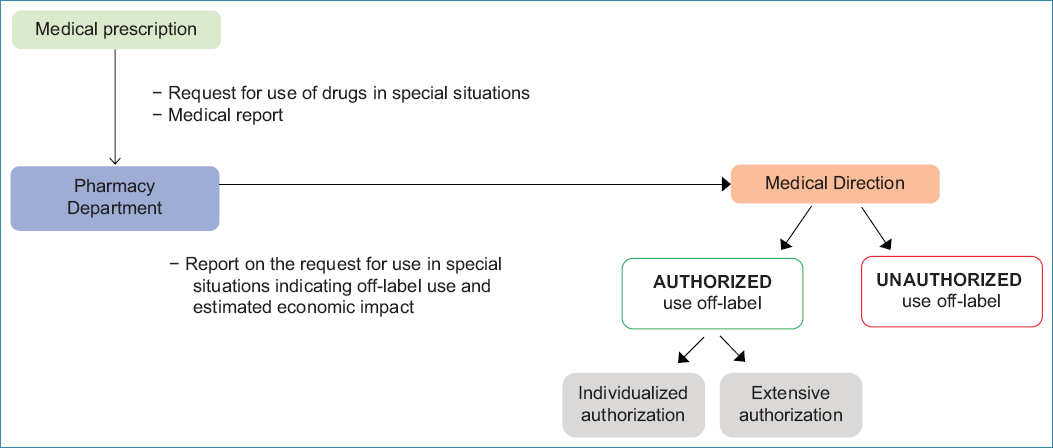
Figure 2. Procedure for requesting medicines under conditions other than those authorized (adapted from: Servicio Andaluz de Salud [Junta de Andalucía, Consejería de Salud]. Comité técnico para la utilización de medicamentos en situaciones especiales y de los no incluidos en la financiación, 2018.41)
To determine the current funding status of medicines, BIFIMED,42 the Ministry of Health’s search engine for information on medicine funding, should be consulted.
All medicines requested must either be included in the funding of the National Health System or be excluded from funding. Royal Decree-Law 16/2012,43 of April 20th, on urgent measures to guarantee the sustainability of the Spanish National Health Service and improve the quality and safety of its services, states that “medicines and medical devices not included in public funding may only be acquired and used by public system hospitals following agreement by the committee responsible for therapeutic protocols or the equivalent collegiate body in each region. It should be clarified that the medicines referred to in this text are exclusively those excluded from funding based on the criteria established in Article 93.2 of Royal Legislative Decree 1/2015,43 of July 24th, approving the consolidated text of the law on guarantees and the rational use of medicines and medical devices.
Medicines for which inclusion in funding has been denied for some or all of their indications by express resolution of the Interministerial Committee on Medicine Prices do not fall within this category. In such cases, they cannot be included in pharmaceutical provision.
In the specific case of off-label use of medicines, since the funding assessment of a medicine is performed for each of its specific indications, unauthorized indications have not been subject to such assessment. For this reason, and whenever so deemed by the Medical Director or the regional Central Pharmacy and Therapeutics Committee, these treatments may be prescribed on an exceptional basis, according to criteria of efficacy, safety, and efficiency.
Protocols and clinical guidelines
Many professionals are not always able to identify off-label prescribing. Specifically, 26.7% of Spanish pediatricians surveyed between 2012 and 2013 were unaware of whether they were prescribing outside the authorized indication.44 Therefore, it is essential that care protocols and clinical guidelines explicitly indicate when a medicine is being used under conditions other than those authorized. This would reduce the need for physicians to consult the summary of product characteristics in each case, thereby avoiding delays in care and facilitating compliance with the moral obligation and current regulations requiring patients to be adequately informed.45
Generation of scientific evidence
Reducing unnecessary off-label use requires strengthening the generation of high-quality scientific evidence through clinical trials and post-authorization studies promoted by industry, but also through real-world evidence generation studies conducted by healthcare professionals. Regulatory agencies have developed specific frameworks to integrate Real World Data and Real World Evidence into decisions on efficacy and safety, particularly for indication extensions or in contexts where traditional clinical trials are complex or poorly representative.46,47 These studies are particularly important for monitoring outcomes, detecting safety signals, and estimating effectiveness in underrepresented subgroups, thereby helping to reduce the tendency toward off-label use based solely on limited scientific evidence.
Education and training of healthcare professionals
Misuse of off-label regimens may breach lex artis. The healthcare system should pay particular attention to the training of healthcare professionals, given their future role in patient care. In this context, insufficient public funding for continuing education favors industry involvement; therefore, scientific societies must maintain transparent relationships with pharmaceutical companies, preserve their independence, and ensure an accessible, high-quality training offer.39
The existence of educational materials aimed at patients also contributes to a more realistic understanding of the concept of off-label use, avoiding confusion between “not indicated” and “prohibited” or “uncontrolled experimental use.” The availability and quality of this information directly influence trust in, and acceptance of, off-label use.
Pharmacovigilance
Pharmacovigilance allows the safety of medicines to be systematically assessed under real-world conditions of use.48 Since pre-marketing clinical trials are conducted in small samples and under highly standardized conditions, extrapolation of the results obtained from these studies is limited. This uncertainty is even greater in the case of unauthorized indications, and off-label use may be associated with a higher risk of adverse reactions than authorized uses. It is therefore essential to strengthen spontaneous reporting of suspected adverse reactions by healthcare professionals and patients.
Concluding remarks
The lack of specific protocols to clearly determine the appropriateness of off-label prescribing increases heterogeneity in decision-making, entails a greater risk of inequity, and compromises equality of opportunity for patients receiving ART. For this reason, an ethical and legal analysis has been conducted of the current situation regarding the use of HIV medicines under conditions other than those authorized, a practice that is increasingly prevalent today.
Off-label use of medicines consists of prescribing already marketed medicines under conditions other than those included in their authorized summary of product characteristics. Provided that current regulations are respected, it may constitute an appropriate therapeutic alternative. Nevertheless, this phenomenon involves significant challenges and risks and may influence the therapeutic management of patients with HIV infection.
The general conclusion reached in this study is that off-label use of medicines cannot be assessed unequivocally as either ethically acceptable or unacceptable. Its moral legitimacy depends on the clinical context, the quality of the available scientific evidence, and respect for fundamental bioethical principles. Its use is often supported by evidence similar to, or even stronger than, that supporting an authorized indication, such that scientific evidence may be more relevant than the formal existence of marketing authorization.49 Off-label use may constitute a reasonable and even necessary therapeutic option in certain scenarios, especially when no effective authorized alternatives are available or when the patient belongs to populations that are poorly represented in clinical trials. However, most healthcare centers accept a lower level of evidence when no therapeutic alternatives exist, thereby increasing uncertainty regarding the benefit-risk balance.25 This situation places the patient in a position of particular vulnerability and requires healthcare professionals to apply the precautionary principle, avoiding both the unjustified omission of potentially beneficial treatments and prescribing based on unfounded expectations or external pressures.
Analysis from the perspective of principlist bioethics shows that off-label use places particular strain on the principles of autonomy, non-maleficence, beneficence, and justice. Autonomy occupies a central role, since the uncertainty associated with these prescriptions requires that patients be provided with clear, truthful, and understandable information to ensure genuine IC. The principle of non-maleficence is compromised when off-label use becomes normalized without sufficient clinical justification or when treatments with relevant risks are prescribed despite the existence of alternatives with a better safety profile. Beneficence, by contrast, may support such prescribing when it explicitly seeks the greatest benefit for the patient in contexts of unmet therapeutic need. The principle of justice, in turn, raises dilemmas related to the equitable distribution of resources and unequal access to innovative treatments.
Virtue bioethics underlines that adequate ethical deliberation requires professionals endowed with prudence, intellectual honesty, and detachment from interests unrelated to the patient’s welfare.
Utilitarian bioethics highlights the tension between individual benefit and collective well-being.
The legal analysis confirms that the Spanish legal framework recognizes the exceptional nature of off-label use and establishes safeguards aimed at protecting patients. However, the gap between the regulation and clinical practice reveals the need to improve its effective implementation.
Strategies to guide the evaluation of off-label prescribing are therefore essential. These include the implementation of protocols and clinical guidelines that address the use of treatments outside their authorized indications, the generation of high-quality scientific evidence to fill existing knowledge gaps, the training of healthcare professionals and patients, and the reinforcement of pharmacovigilance systems.
Ultimately, compliance with the ethical requirements analyzed throughout this article in decision-making on off-label use is an essential condition for therapeutic choices to respect the dignity of both the patient and the healthcare professional.
Funding
None.
Conflicts of interest
None.
Ethical considerations
Protection of human subjects and animals. The authors declare that no experiments on humans or animals were performed for this research.
Confidentiality, informed consent, and ethical approval. This study does not involve personal patient data, medical records, or biological samples, and does not require ethical approval. SAGER guidelines do not apply.
Declaration on the use of artificial intelligence. The authors declare that no generative artificial intelligence was used in the writing or creation of the content of this manuscript.
